
Product Owner Availability and Team Collaboration
Product Owners help teams make better product decisions.
That requires time.
A Product Owner does not need to sit with the team all day, attend every conversation, or answer every question immediately. But the team needs reliable access to decisions, feedback, and clarification.
When Product Owners are unavailable, the team waits or guesses. Waiting slows delivery. Guessing creates rework.
Good Product Owner collaboration is a balance. The Product Owner should stay engaged enough to help the team make good product decisions, but not so involved that every small choice has to wait for Product Owner approval.
Who This Page Is For
This page is for Product Owners, Scrum Masters, agile coaches, Developers, managers, and stakeholders who want better collaboration between Product Owners and Scrum Teams.
It is especially useful when the Product Owner is hard to reach, the team waits for answers, Sprint Planning uncovers too many open questions, or the Product Owner interrupts the sprint with new priorities.
In This Page
You will learn how available a Product Owner should be, what Product Owner collaboration looks like during a sprint, when the team can answer its own questions, and how Scrum Masters can help busy Product Owners stay engaged.
You will also learn common availability problems and practical questions for improving Product Owner and team collaboration.
What Product Owner Availability Means
Product Owner availability means the team can get timely product decisions, feedback, and clarification.
It does not mean the Product Owner must attend every technical discussion or approve every detail. It does not mean the team should stop thinking whenever a question appears.
The Product Owner should be available for questions that affect product value, scope, priorities, acceptance, stakeholder commitments, user experience, or the outcome the team is trying to achieve.
The team should usually be able to answer smaller implementation questions on its own.
A useful test is:
If the team guesses wrong, would the product backlog item be unacceptable?
If yes, the Product Owner should clarify. If no, the team can often use its judgment and keep moving.
Product Ownership Happens During the Sprint
Some Product Owners are highly involved before Sprint Planning and again at the Sprint Review, but disappear during the sprint.
That creates problems.
During the sprint, the team may discover that a backlog item is more complicated than expected, that an acceptance criterion needs interpretation, that an edge case matters, or that a simpler solution would meet the goal. The Product Owner does not need to solve every one of those problems, but the Product Owner should be available when product direction is needed.
Good Product Owners stay engaged during the sprint by:
- answering product questions in a timely way;
- reviewing emerging work before it is too late to change;
- clarifying tradeoffs when scope questions arise;
- helping protect the Sprint Goal from unnecessary disruption; and
- using what the team learns to inform future backlog decisions.
This is not micromanagement. It is product ownership.
Be Available Without Becoming a Bottleneck
A Product Owner can be too unavailable. A Product Owner can also be too central to every decision.
Both slow the team.
If every question waits for the Product Owner, the team loses momentum. Developers, testers, designers, and analysts have expertise the Product Owner should use. They can often make good decisions when they understand the goal, the user, the tradeoffs, and what must be true for the item to be considered complete.
The Product Owner should be explicit about what matters most.
For example, if the sort order on a screen is critical because users must see overdue items first, say so. If the Product Owner has no strong preference, let the team choose a reasonable default.
The Product Owner should not have to specify every detail. The team should not have to guess about the details that matter.
Inspect Emerging Work Early
Product Owners should see work while there is still time to adapt.
Waiting until the Sprint Review to discover a misunderstanding is expensive. By then, the team may have built the wrong thing, missed an important detail, or failed to consider a simpler option.
A quick look during the sprint can prevent that.
The Product Owner might review a screen before it is finished, try a partially working workflow, discuss an example with a tester, or answer a question about a tradeoff the team has discovered.
The goal is not to accept or reject every piece of work before the Sprint Review. The goal is to inspect early enough that the team can adapt while the work is still in progress.
Protect the Sprint Goal Without Disappearing
Product Owners should not disrupt the sprint every time a new idea appears.
A sprint gives the team a short period of focus. New information may still emerge, and sometimes that information is important enough to change direction. But most new requests can go into the product backlog and be considered later.
The Product Owner helps by protecting the Sprint Goal.
That means the Product Owner should be available for questions and feedback while also being careful not to keep changing priorities inside the sprint. Availability should help the team finish the right work. It should not become a channel for constant interruption.
When a truly important change appears, the Product Owner should discuss it with the team. If the Sprint Goal is no longer valuable, the team and Product Owner may need to make a larger decision. But that should be rare.
Collaborate Before Sprint Planning
The best Product Owner collaboration during a sprint often starts before the sprint begins.
If upcoming product backlog items are vague, too large, or poorly understood, Sprint Planning becomes difficult. Product Owners and teams reduce that risk by refining upcoming items, clarifying intent, splitting large items, identifying examples, and discussing what must be true for the item to be considered complete.
The goal is not perfect detail. The goal is enough shared understanding that the team can bring the item into a sprint responsibly.
Collaborate During Sprint Planning
Sprint Planning is not the Product Owner handing work to the team.
The Product Owner brings priorities, goals, and product context. The team brings capacity, technical understanding, implementation options, and delivery experience.
Together they select work that supports the Sprint Goal and adjust scope when the team’s forecast differs from what the Product Owner expected.
Collaborate During the Sprint Review
The Sprint Review is a major opportunity for Product Owner and team collaboration.
The team shows what it has built. Stakeholders provide feedback. The Product Owner helps turn that feedback into learning and future product backlog decisions.
A Product Owner who has stayed engaged during the sprint will usually be better prepared to lead that conversation.
Scrum Masters Can Help Their Product Owner
Some Product Owners are unavailable because they do not understand how much the team needs them.
Others understand but are overwhelmed.
Scrum Masters can help.
One useful approach is to create shared time for important Product Owner work. A Product Owner may intend to clarify acceptance criteria, review upcoming items, or prepare for Sprint Planning but never get to it. Putting time on the calendar with the Scrum Master or team can turn that work from a private intention into a shared commitment.
Scrum Masters can also help the team avoid escalating every small question. When the Product Owner has already made the important tradeoffs clear, the team can make many reasonable implementation decisions itself.
And Scrum Masters can help Product Owners find better ways of working: story mapping, improved refinement, stronger examples, lighter documentation, or other practices that reduce unnecessary Product Owner effort.
The answer to a busy Product Owner is not always “work harder.” Sometimes it is “work differently.”
When the Product Owner Is Too Busy for the Role
Sometimes the problem is not poor time management.
The person may truly be too busy to be an effective Product Owner.
That often happens when a senior leader, department head, or key business expert is named Product Owner but cannot give the team reliable access to decisions. That person may be extremely important to the product. They may be the key stakeholder. But they may not be the right Product Owner.
If the team cannot get timely answers, cannot get feedback during the sprint, and cannot rely on the Product Owner to participate in backlog decisions, the organization may need a different structure.
That might mean appointing a Product Owner who has the time to work with the team while keeping the senior person involved as a key stakeholder. Or it may mean giving the existing Product Owner fewer competing responsibilities.
A Product Owner title without enough time to do the work does not help the team.
Common Product Owner Collaboration Problems
Common problems include:
- The Product Owner disappears during the sprint. Questions accumulate and assumptions multiply.
- The Product Owner answers every small question. The team loses momentum when every detail waits for Product Owner approval.
- The Product Owner changes priorities mid-sprint. Availability should not become interruption.
- The team avoids the Product Owner. Waiting until the Sprint Review to show work delays learning.
- Sprint Planning becomes refinement. If the team first learns what a backlog item means during planning, refinement came too late.
- The Product Owner is really a key stakeholder. Some people are too busy or too far from the team to fulfill the Product Owner role well.
Is Product Owner Collaboration Working?
Use these questions to find the next Product Owner and team collaboration conversation.
- Can the team get timely answers to product questions during the sprint?
- Does the Product Owner inspect emerging work early enough for the team to adapt?
- Are upcoming backlog items refined enough before Sprint Planning?
- Does the team understand which details matter to the Product Owner and which it can decide itself?
- Does the Product Owner protect the Sprint Goal from unnecessary interruption?
- Does the team show work early enough to get useful feedback?
- Does the Sprint Review create learning that affects future backlog decisions?
- Is the Product Owner available because the role has enough time, not just because the person tries harder?
- Can the Scrum Master help the Product Owner make time for important work?
- If the Product Owner is too busy, is there a better role or structure for that person?
This is not a scorecard. Use it to decide whether the next improvement should be more availability, clearer decision boundaries, better refinement, earlier feedback, or a different product ownership structure.
Common Questions About Product Owner Availability
How Available Should a Product Owner Be?
Available enough that the team can get timely product decisions, feedback, and clarification.
That does not mean the Product Owner must be present for every conversation or answer every question immediately. It means the team should not regularly wait or guess because the Product Owner is unreachable.
Should the Product Owner Attend the Daily Scrum?
The Product Owner may attend the Daily Scrum if it helps, but the Daily Scrum is for the Developers to inspect progress toward the Sprint Goal and adapt their plan.
The Product Owner should not turn it into a status meeting or use it to change priorities.
Should the Product Owner Be in Sprint Planning?
Yes.
The Product Owner brings the product goal, product backlog priorities, and product context. The team brings its capacity, technical understanding, and delivery experience.
Should the Product Owner Attend the Sprint Review?
Yes.
The Sprint Review is one of the Product Owner’s most important opportunities to inspect working product with stakeholders, learn from feedback, and decide what should happen next.
What If the Product Owner Is Too Busy?
If the Product Owner is temporarily busy, the Scrum Master and team may be able to help by making time for important work and reducing unnecessary Product Owner decisions.
If the Product Owner is consistently too busy to support the team, the organization may need a different Product Owner or a different structure.
Recommended Articles
How to Engage & Help Busy Product Owners
Practical guidance for Scrum Masters and teams when Product Owners are hard to reach during the sprint.
What Product Owners Do and 7 Mistakes to Avoid
Useful for recognizing Product Owner behaviors that weaken team collaboration, such as interrupting sprints, dictating solutions, or lacking authority.
What Does a Product Owner Do, When, and Why?
Explains Product Owner responsibilities before a project, quarterly, each sprint, and throughout the product lifecycle.
Six Ways to Become a Great Product Owner
Describes what teams need from Product Owners, including availability, vision, collaboration, and flexibility.
Can a Product Owner Dictate the Architecture?
Clarifies the Product Owner’s role in product direction and the team’s role in technical decisions.
Related Pages
Product Owner Role and Responsibilities
Learn how Scrum defines the Product Owner accountability and how the role works with the Scrum Team.
Product Backlog Refinement
Learn how Product Owners and teams refine upcoming work enough to make responsible Sprint Planning decisions.
Sprint Planning Meeting
Useful when collaboration problems show up as difficult, unfocused, or low-confidence Sprint Planning.
Sprint Review
Learn how Sprint Reviews help Product Owners, teams, and stakeholders inspect the product and adapt future plans.
All Articles on This Subtopic
Explore Mountain Goat Software articles related to Product Owner availability, team collaboration, sprint engagement, refinement, Sprint Planning, Sprint Review, and Scrum Master support for busy Product Owners.
Product Owner Availability and Team Collaboration
- How to Engage & Help Busy Product Owners
- What Product Owners Do and 7 Mistakes to Avoid
- What Does a Product Owner Do, When, and Why?
- Six Ways to Become a Great Product Owner
- Can a Product Owner Dictate the Architecture?
- Product Backlog Refinement
- Sprint Planning Meeting
- Sprint Review Meeting
Availability and Team Collaboration Resources
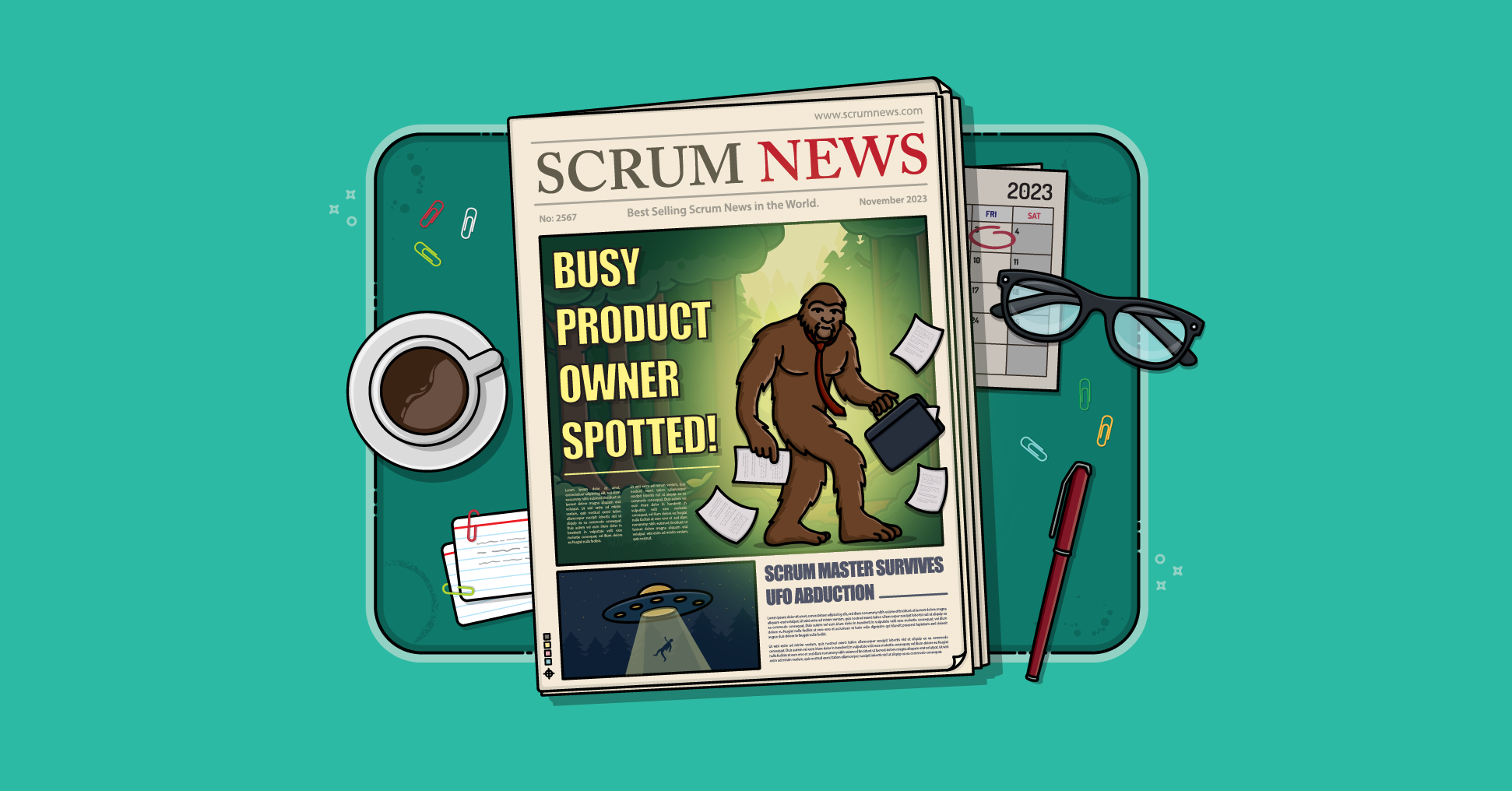
With many competing pulls on their time, product owners can be hard to catch during a sprint. Learn how to help harried product owners seize opportunities to inspect and adapt outside the sprint review.

Learn what good product owners do to avoid 7 common product owner mistakes.
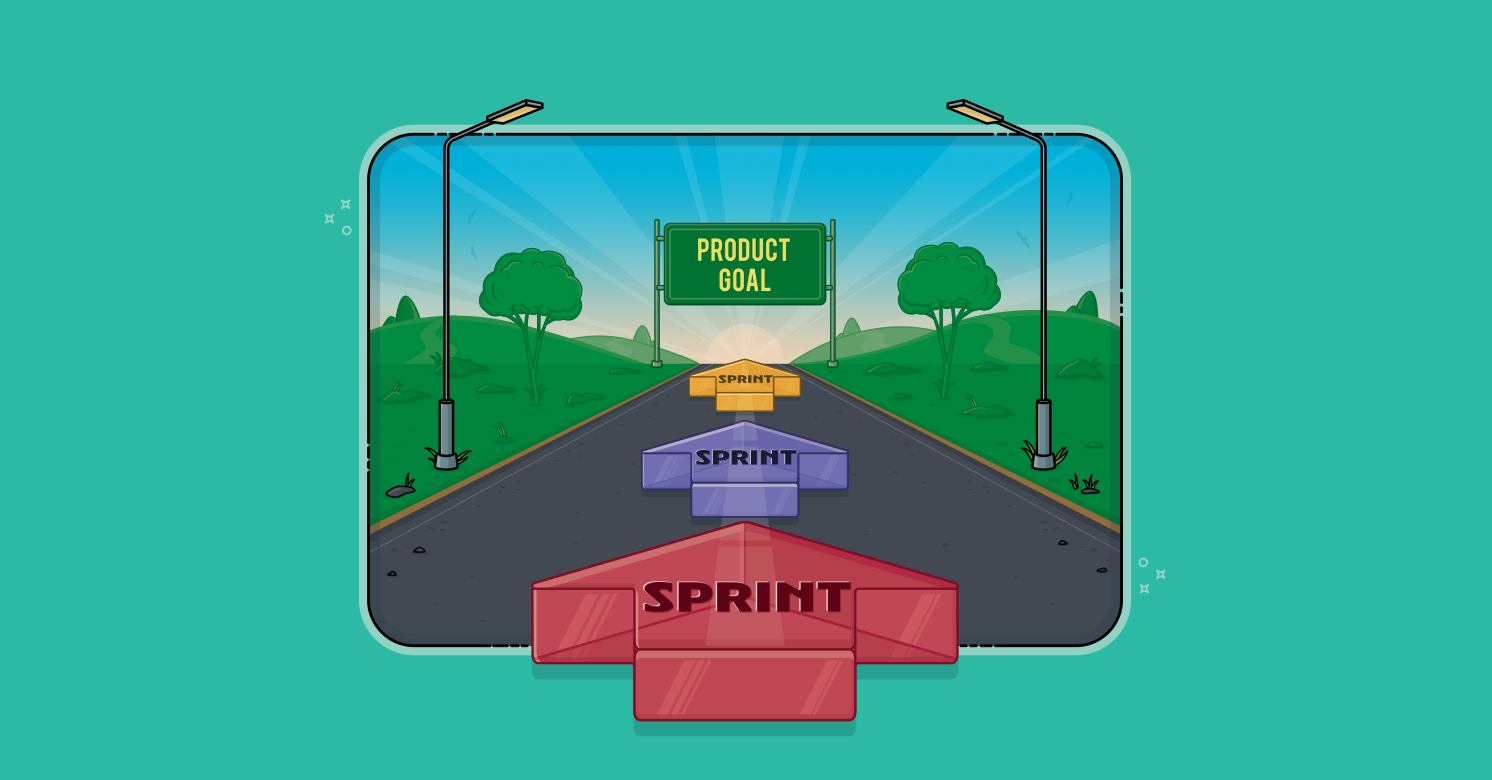
Ever wondered what product owners do? Have you scratched your head, wondering when they do it all, and why? If so, this blog is for you.
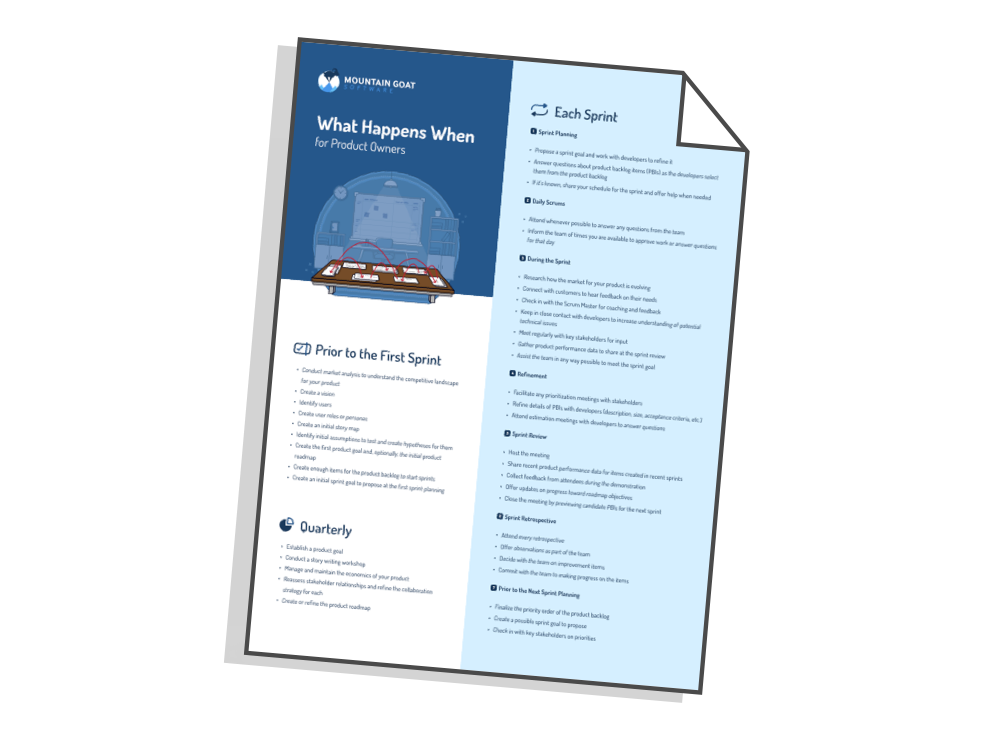
A downloadable guide for understanding what Product Owners do and when those responsibilities occur.
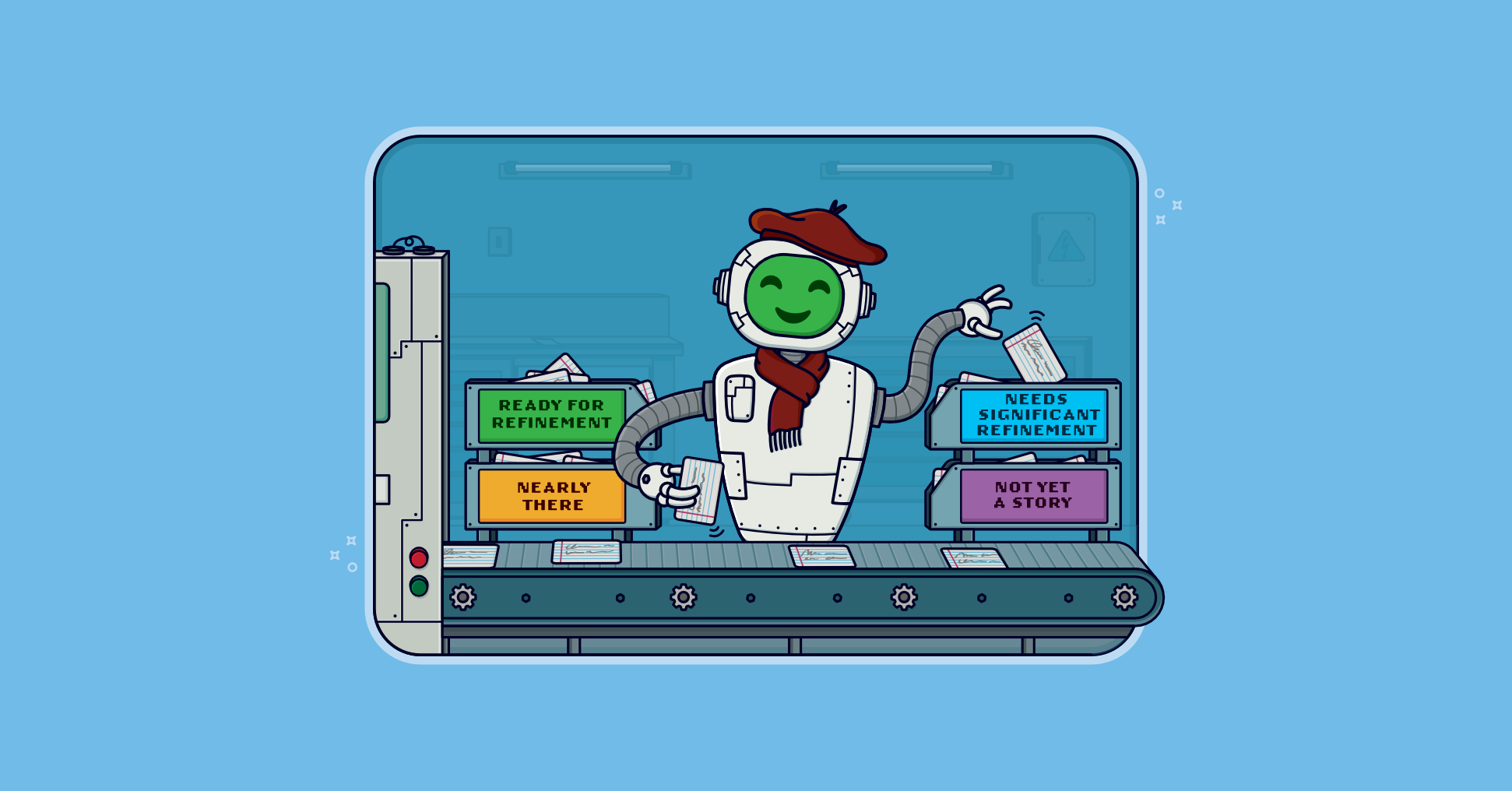
Paste in a user story, job story, technical story, bug, spike, or chore and get coaching on clarity, readiness, testability, and backlog placement.